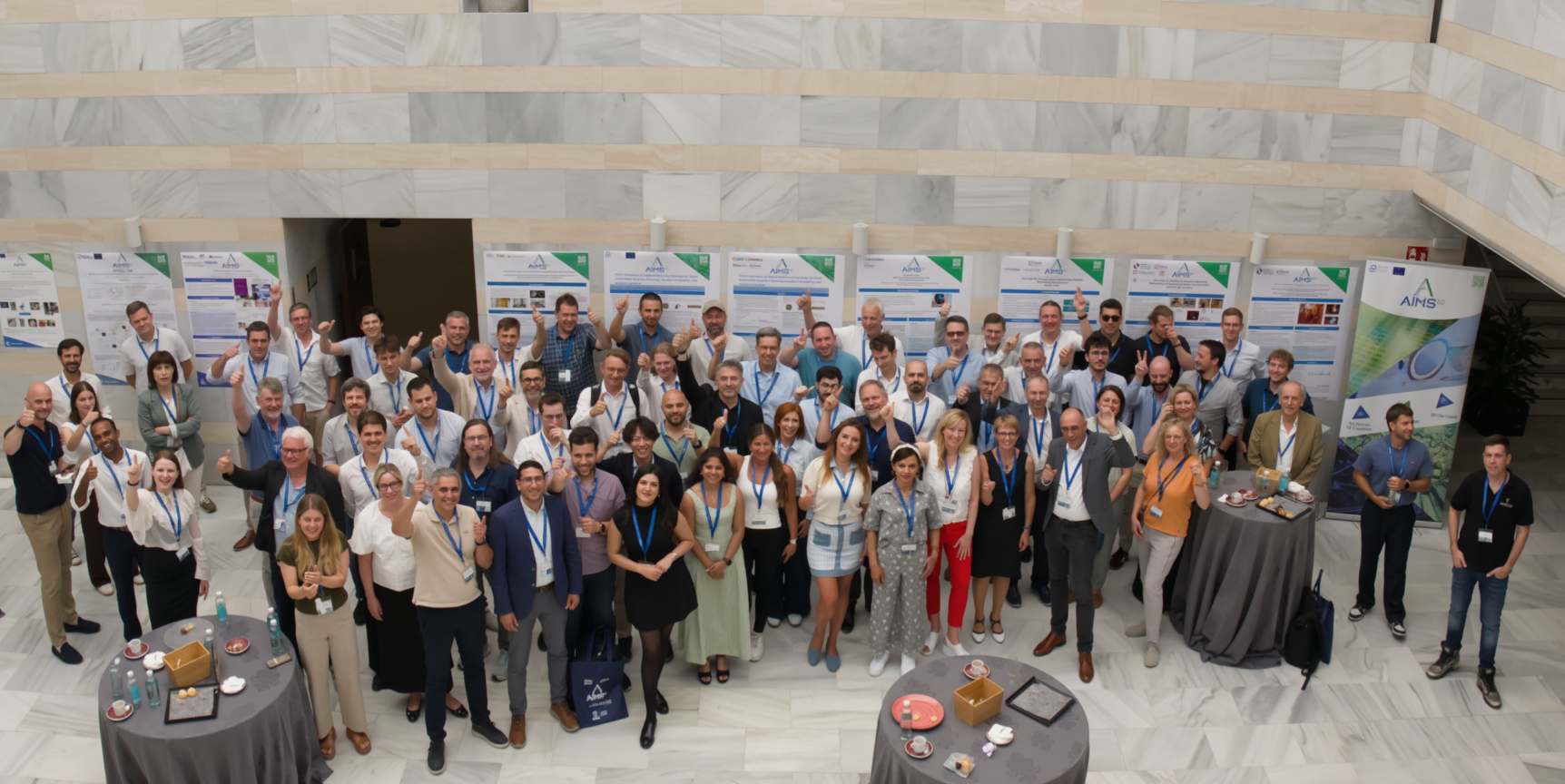
June 16-17 2026
AIMS5.0 General Assembly in Madrid: From Project Results to Industrial Impact
A final General Assembly focused on outcomes
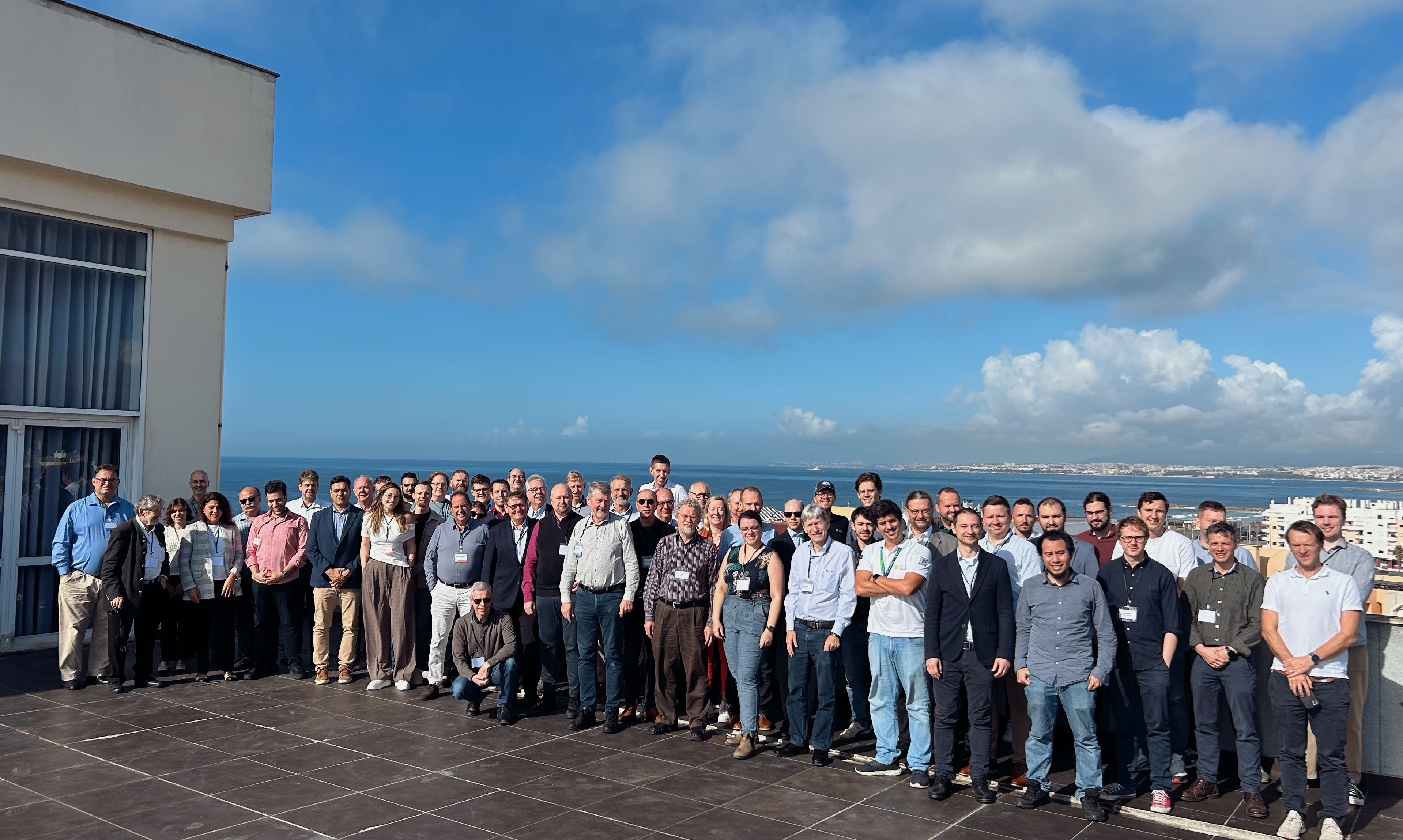
On 16-17 June 2026, the AIMS5.0 consortium met in Madrid for the project’s General Assembly. The meeting brought partners together for two days of technical exchange, Work Package updates, selected Use Case presentations, poster sessions and demonstrator discussions.
As the project approaches its final phase, the meeting provided a concentrated view of the results achieved over three years of European collaboration. The focus was not only on reporting progress, but also on connecting these results with the industrial challenges addressed by AIMS5.0: competitiveness, resilience, sustainability and the practical use of artificial intelligence in manufacturing.
Opening perspective: AI, competitiveness and resilience
The General Assembly opened with welcome remarks from Dr Sabine Herlitschka, CEO of Infineon Technologies Austria AG. Her message set a clear strategic frame for the meeting by linking the work of AIMS5.0 to Europe’s industrial competitiveness and the need to strengthen value creation in Europe.
In her remarks, she pointed to the importance of using AI to support stronger value chains, improve resource optimisation and contribute to energy efficiency. She also underlined that resilience and competitiveness need to be considered together: industrial systems must not only withstand disruptions, but also remain globally competitive and capable of innovation.
This perspective is closely aligned with the ambition of AIMS5.0. The project demonstrates how AI can move from research and experimentation into practical industrial environments, where it can support better decision-making, more efficient processes and more sustainable production models.
Use cases and demonstrators showing progress
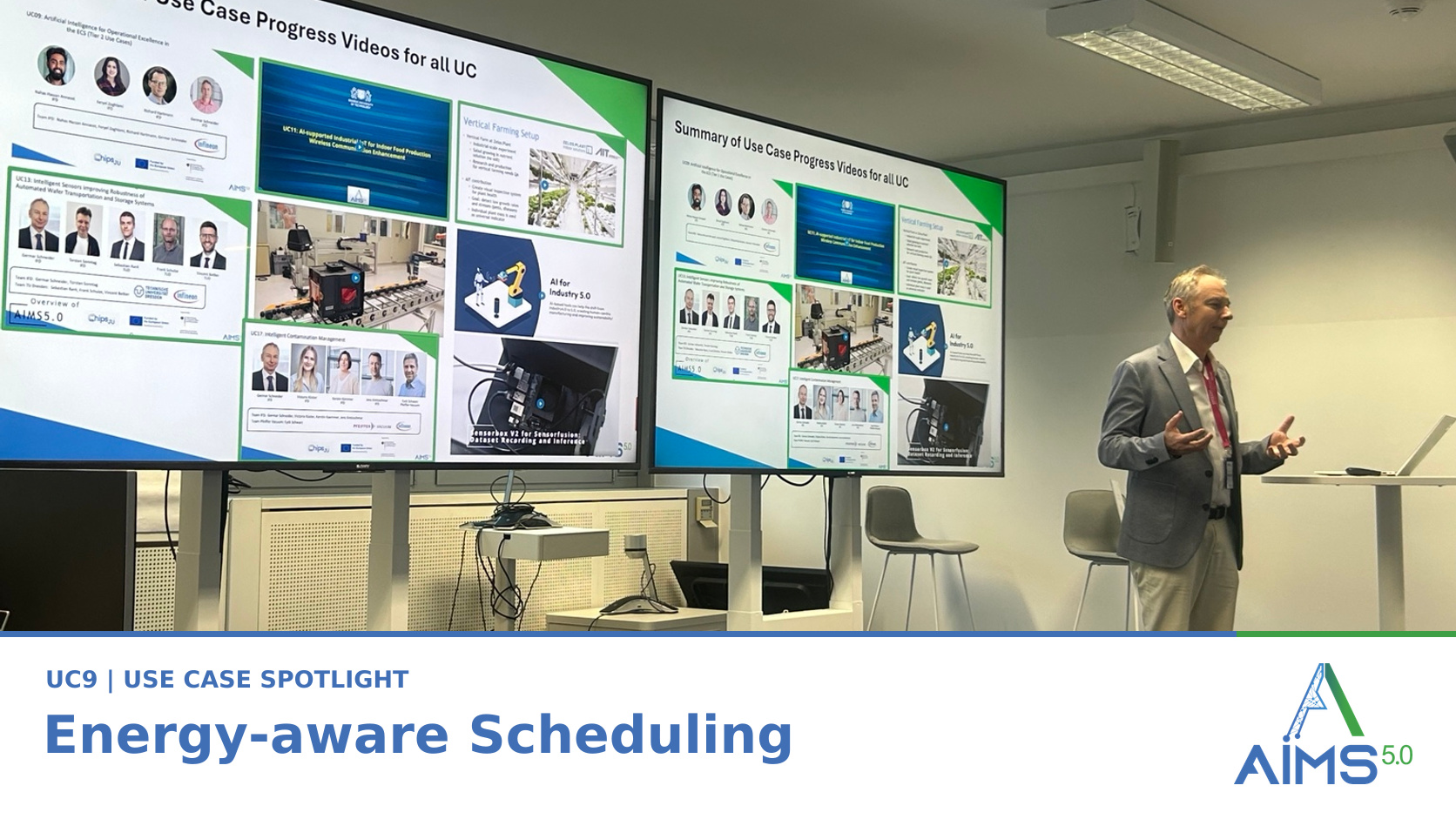
The strategic message from the opening session became concrete in the Use Case and demonstrator sessions. Partners presented results across areas such as AI-enhanced value chains, improved links between production and logistics, digital manufacturing platforms, AI-based MES concepts, human-centred AI, virtual commissioning through digital twins and semiconductor manufacturing.
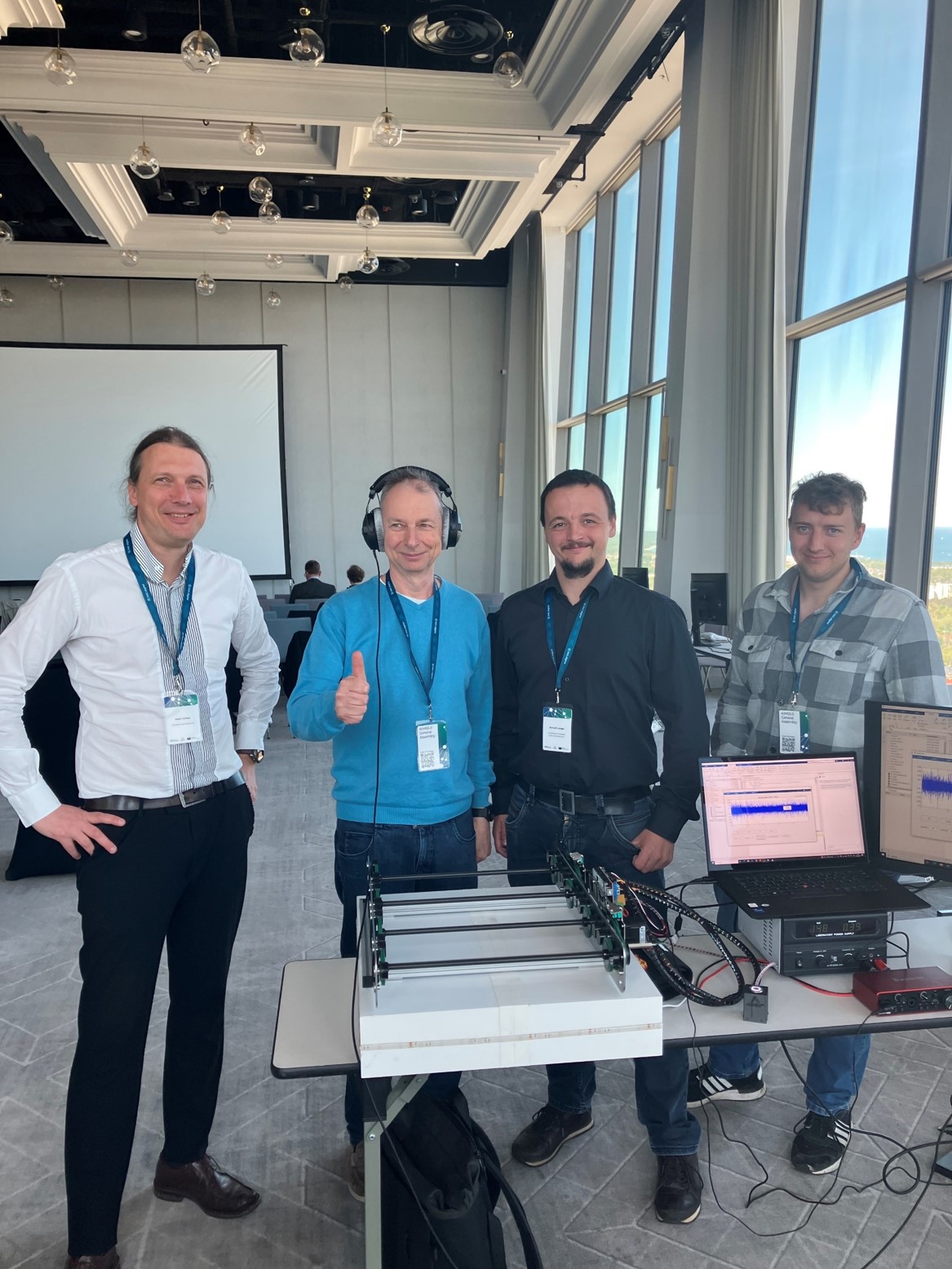
A special focus was placed on the demonstrators. More than 40 stands presented partner contributions, use case developments and practical examples of AI-enabled manufacturing in action. These sessions enabled direct exchange between partners and showed how different parts of the project connect to one another.
Work Package progress and project impact
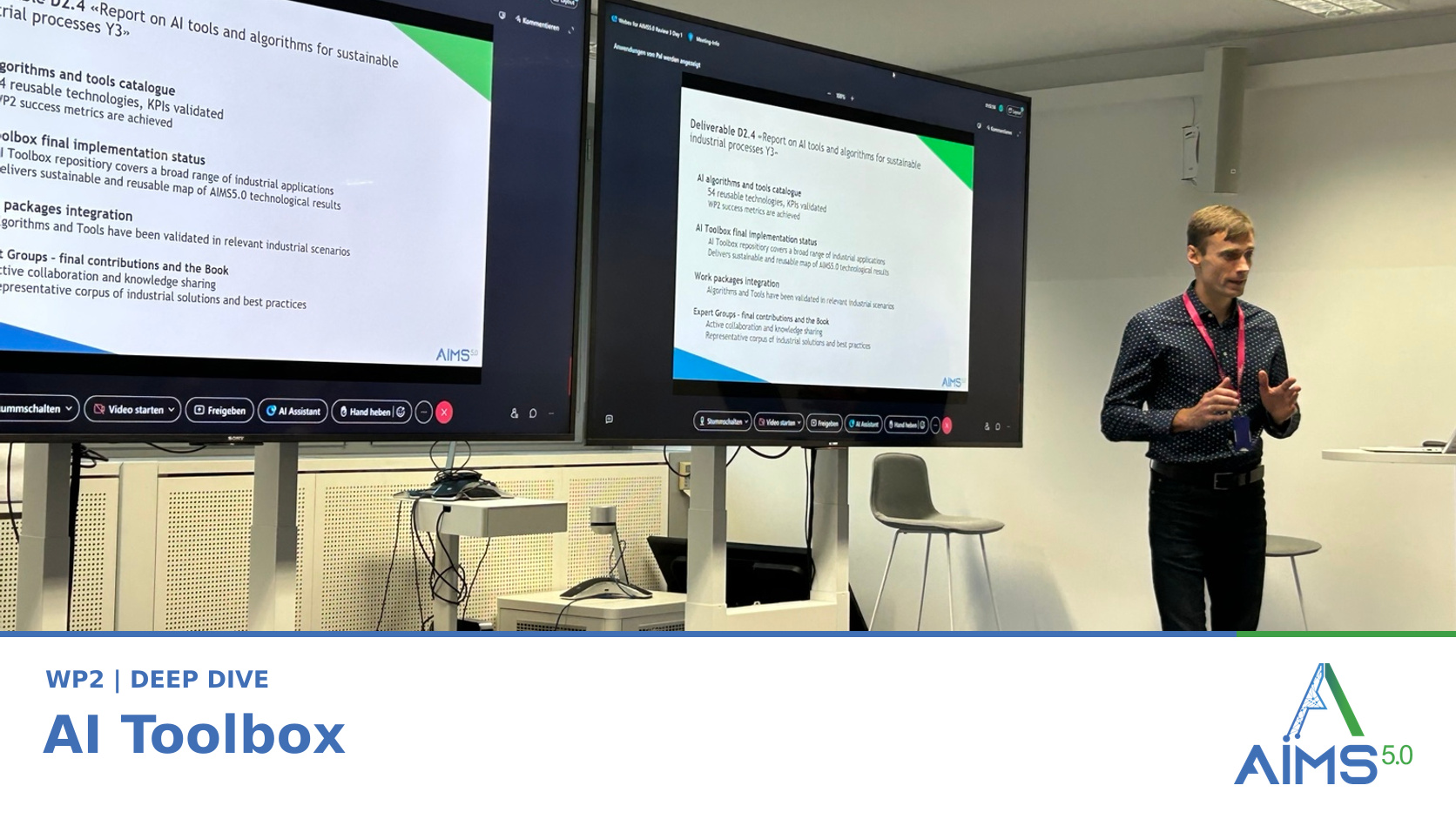
The Work Package updates provided a structured overview of progress across the technical, organisational and impact-oriented parts of the project. They showed how individual activities contribute to the overall AIMS5.0 objective: developing and validating AI-enabled solutions for sustainable, resilient and human-centred manufacturing.
The discussions also confirmed the importance of connecting technical development with exploitation, standardisation, dissemination and impact. For a project of this scale, results need to be visible, transferable and useful beyond the consortium.
Human-centred and sustainable manufacturing
AIMS5.0 also places strong attention on the human dimension of industrial transformation. AI in manufacturing should not be understood only as automation or optimisation. It should support people, strengthen trust in digital systems and contribute to safer and more effective working environments.
Together with sustainability, resource efficiency and resilience, this human-centred perspective forms an important direction for the future of AI-enabled manufacturing in Europe.
European collaboration as a foundation for industrial value
The Madrid General Assembly demonstrated the value of European collaboration. AIMS5.0 brings together industry, research and technology partners to address challenges that cannot be solved by a single organisation alone. Its strength lies in connecting industrial needs, scientific knowledge and practical implementation capacity.
The outcomes presented in Madrid contribute to a broader European effort to strengthen manufacturing competitiveness, support sustainable industrial transformation and bring AI closer to real production environments.
Acknowledgements
Thank you to Eduardo Juárez Martínez and Universidad Politécnica de Madrid, through CEIIMM / CEI - Centro de Electrónica Industrial y Sistemas Multimodales, for hosting the consortium in Madrid and for the organisation, venue support and welcoming setting throughout the General Assembly.
Thank you also to Thomas Gutt, AIMS5.0 coordinator from Infineon Technologies AG, for guiding the General Assembly sessions and supporting the consortium’s work.
Finally, thank you to all AIMS5.0 partners, presenters and contributors for the active discussions, technical exchange and engagement in Madrid. Together, the consortium continues to move AI-enabled manufacturing forward in Europe.
More infos in the attached video



 Imprint