AIMS5.0 - The next big step in digital transformation

April 13 2026

AIMS5.0: How AI and Digitalisation Strengthen the European Manufacturing Supply Chain

From technical work packages to measurable impact across devices, manufacturing, OEMs, and EU markets

Introduction


Europe’s manufacturing sector is under growing pressure to become more competitive, resilient, and sustainable at the same time. In this context, AIMS5.0 contributes by developing and connecting technologies and methods from the fields of digitalisation and artificial intelligence. The project does not focus on isolated technical improvements alone. Instead, it addresses the broader industrial value chain and supply chain, from devices and architecture systems to manufacturing, OEMs, and ultimately the EU market.


The ambition behind AIMS5.0


Within AIMS5.0, the central objective is to make manufacturing in Europe more competitive and more sustainable through the targeted use of digital technologies and AI. What makes this approach especially relevant is its end-to-end perspective. Rather than improving only individual process steps, the project aims to generate benefits across an interconnected industrial ecosystem.
This broader perspective is essential in modern manufacturing environments, where competitiveness depends not only on technical excellence in one area, but on how effectively information, systems, and processes interact across the full chain. AIMS5.0 therefore builds a bridge between enabling technologies and practical industrial application.


Building the technical foundation: AI hardware, software and the AI Toolbox


To support this objective, AIMS5.0 established technical work packages dedicated to the structured development of AI hardware and software. These work packages form the technological backbone of the project and provide the basis for scalable digital innovation in manufacturing.


A central element in this context is the AI Toolbox. Through this toolbox, different algorithms for European manufacturing are made available in a way that supports broader reuse and transferability. This is important because it allows AI-based solutions to serve not only as isolated implementations, but as reusable technological building blocks that can evolve and be applied across different industrial settings.


This approach strengthens the long-term value of the project. Instead of delivering one-off technical results, AIMS5.0 contributes to a foundation that supports broader uptake, adaptation, and replication in industrial environments.


Why data architectures and ontologies matter


Alongside the development of AI hardware, software, and algorithms, AIMS5.0 also addresses the question of how information is structured and exchanged. For this reason, two further work packages focus on data architectures and specialised ontologies based on Semantic Web applications.


These elements are highly relevant for modern manufacturing systems. In practical terms, they help ensure that data, concepts, and relationships can be structured consistently across systems, organisations, and process steps. This consistency is essential if digital solutions are to operate reliably beyond a single application or isolated pilot environment.


By enabling information to remain understandable, analysable, and interoperable across interfaces, data architectures and ontologies create the conditions for scaling the effects of AI and digitalisation throughout the supply chain.


From work packages to supply-chain impact


The real strength of AIMS5.0 lies in the combination of its different technical components. By bringing together AI hardware and software, the AI Toolbox, and the work on data architectures and ontologies, the project enables decisive improvements across the whole supply chain.


This is particularly important in OEM-related environments, where sustainable optimisation depends on the reliable interaction of suppliers, manufacturing processes, communication systems, and quality requirements. In such contexts, value is created not only through innovation at one single stage, but through coordination and improvement across multiple levels of the chain.


The approaches developed in AIMS5.0 are especially relevant for OEM contexts such as the automotive industry, lighting, robotics, and the plant industry. In all of these domains, efficiency, quality, speed, and dependable supply capability are critical drivers of competitiveness and sustainability.


Why the semiconductor industry is critical for OEMs


For the complete value chain and for OEMs, the semiconductor industry is indispensable in order to deliver components reliably. This makes the role of digitalisation especially visible. When components must be available securely and consistently, industrial actors need transparency, predictability, and robust decision-making across processes, data, and stakeholders.


AIMS5.0 addresses exactly this challenge. By connecting technical development with structured information models and practical industrial implementation, the project supports a more reliable and better coordinated supply chain. In this sense, semiconductor production is not only one industrial field among many, but a strategic foundation for the broader manufacturing ecosystem.


Demonstrating value through use cases


AIMS5.0 does not stop at technical development. A key strength of the project is that its concepts and technologies are demonstrated through concrete use cases.
AIMS5.0 use-case validation in an industrial environment.


Using 12 use cases, it could be shown how digitalisation and AI can make production in the semiconductor industry more competitive and more sustainable. For OEMs, the improvements were described and evidenced using 8 use cases. This gives the project storyline practical credibility, because the connection between technical work and industrial value is not only described conceptually, but also demonstrated through application-oriented validation.


These use cases show how the project’s technical foundations can be translated into measurable effects in real industrial settings. They help connect the underlying work packages with outcomes that are relevant for manufacturing actors and markets.


How the work packages connect to the European supply chain


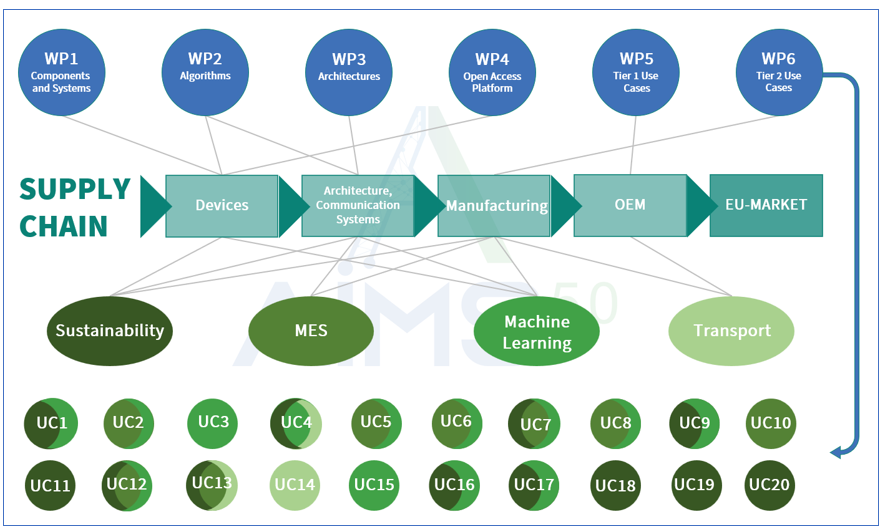
The graphic below provides an overview of how the individual work packages contribute to improving the European supply chain and to transferring these benefits into EU markets.
Along the supply-chain stages Devices -> Architecture and Communication Systems -> Manufacturing -> OEM -> EU Market, the graphic shows how the technical work packages create the enabling basis for industrial progress. WP1 focuses on Components and Systems, WP2 on Algorithms, WP3 on Architectures, and WP4 on the Open Access Platform. These work packages establish and orchestrate the technological foundations of the project. WP5 and WP6 then demonstrate and validate these foundations through Tier 1 and Tier 2 use cases across the supply chain.
This makes the visual especially valuable for the blog article, because it helps readers understand that the project is not a set of disconnected activities. It is a structured system in which technical development, platform logic, industrial validation, and market transfer are all linked together.
Results across MES, sustainability, machine learning and transport


The results from 20 use cases across the major areas of MES, sustainability, machine learning, and transport illustrate the broad potential of the AIMS5.0 approach. Together, these use cases show that significant improvements in cost, speed, and quality can be achieved and substantiated through key performance indicators.
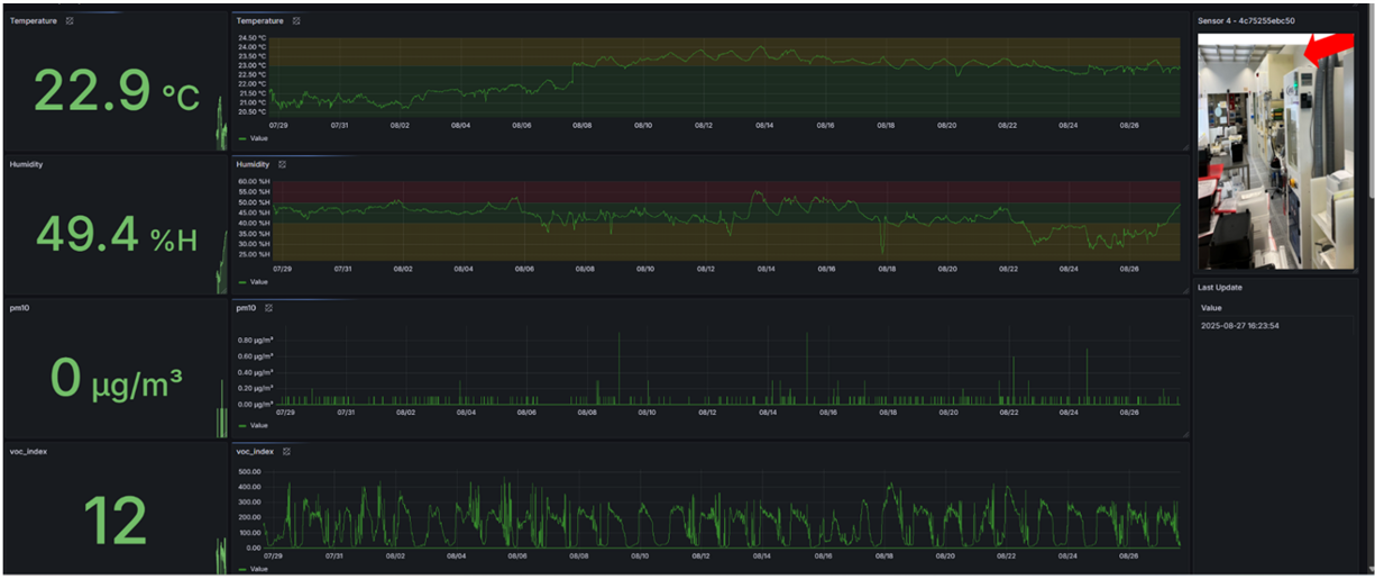
Example of monitored performance indicators within an AIMS5.0 use case.

This is important because it demonstrates that the project does not only generate technical outputs, but also supports measurable industrial value creation. The range of application areas also shows that the AIMS5.0 approach is not limited to a narrow technical niche. Instead, it offers a framework that can support different dimensions of industrial transformation, from production systems and operational efficiency to sustainability and logistics-related processes.


Conclusion


AIMS5.0 demonstrates how digitalisation and AI can contribute to more competitive and more sustainable manufacturing in Europe when they are embedded in a coherent industrial logic. By combining technical work packages, reusable AI components, data architectures, ontologies, and validated use cases, the project connects foundational technology development with real industrial impact.


The overall storyline is therefore clear: from enabling technologies and structured information models, through supply-chain integration and use-case validation, toward measurable improvements and stronger transfer into EU markets. This is what makes AIMS5.0 relevant not only as a research and innovation project, but also as a practical contribution to the future of European manufacturing.


News Grid

Project Results
April 10 2026

AIMS5.0: How AI and Digitalisation Strengthen the European Manufacturing Supply Chain

From technical work packages to measurable impact across devices, manufacturing, OEMs, and EU markets

Introduction

Europe’s manufacturing sector is under growing pressure to become more competitive, resilient, and sustainable at the same time. In this context, AIMS5.0 contributes by developing and connecting technologies and methods from the fields of digitalisation and artificial intelligence. The project does not focus on isolated technical improvements alone. Instead, it addresses the broader industrial value chain and supply chain, from devices and architecture systems to manufacturing, OEMs, and ultimately the EU market.

The ambition behind AIMS5.0 Within AIMS5.0, the central objective is to make manufacturing in Europe more competitive and more sustainable through the targeted use of digital technologies and AI. What makes this approach especially relevant is its end-to-end perspective. Rather than improving only individual process steps, the project aims to generate benefits across an interconnected industrial ecosystem.

Project Results
April 02 2026

SysMLv2 Library for SOA: Arrowhead Work Highlighted in the Context of AIMS5.0 Collaboration

At the OMG technology meeting in Reston, Asma Smaoui (CEA), Jerker Delsing (LTU), and Géza Kulcsár (PTC) presented ongoing work on the ‘SysMLv2 library for SOA’, based on MBSE activities in the Arrowhead fPVN and AIMS5.0 projects. The resulting Arorwhead DSL (Domain Specific Language) is applicable to integration of AI and automation into production and products.

What the presentation focused on

The presentation followed a clear technical path. It introduced the background and resources behind the work, revisited the SysML v1.6 version of the Eclipse Arrowhead DSL, reviewed previous and updated versions of the Arrowhead SysMLv2 library, and explained the translation path from Arrowhead DSL based in SysMLv1 to SysMLv2. It also included concrete use cases, current work related to integration with ISO 23726-3, and forward-looking perspectives.

Project Results
Dezember 18 2025

1. Winter Simulation Conference 2025: Key Insights for AIMS5.0

Introduction

In December 2025, representatives of the Infineon Supply Chain Innovation team participated in the Winter Simulation Conference (WSC) in Seattle, USA. The Winter Simulation Conference is one of the leading global events for simulation experts, researchers, and industry practitioners, with around 1,000 participants from academia and industry.

The participation and research activities were supported by several EU-funded initiatives, including AIMS5.0, SC4EU, and SemiconductorX. This highlights the strong connection between European research projects and global innovation in advanced manufacturing and supply chain management.

Project Results
Dezember 9 2025

1. AIMS5.0 at EFECS Malta 2025

Roadmaps, Project Presentations and New Paths for European Chips

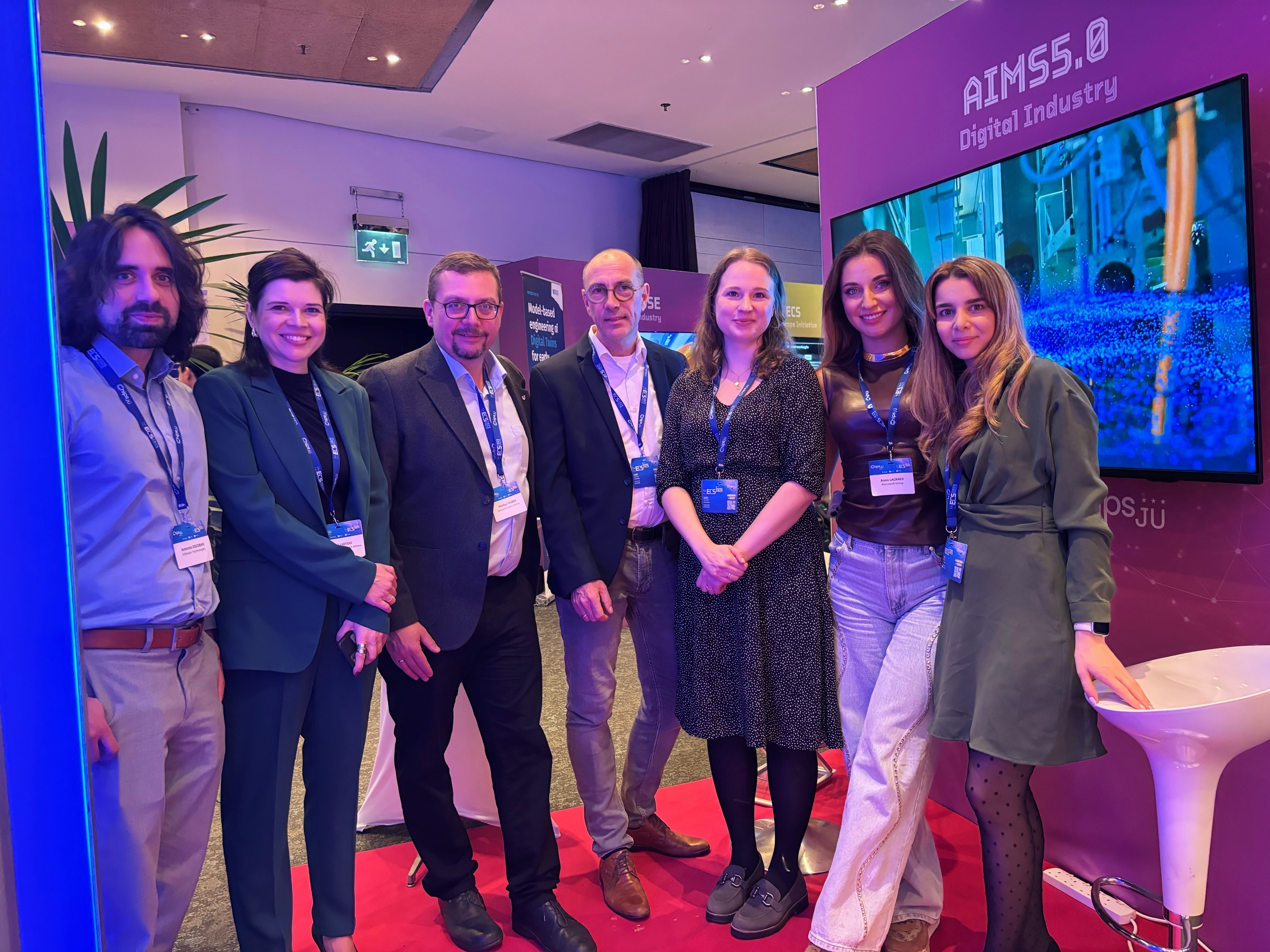
EFECS 2025 took place on 3–4 December at the Hilton Hotel in St Julian’s, Malta, bringing together Europe’s leading stakeholders in electronic components and systems. The forum is co‑organised by Chips Joint Undertaking together with the industry associations AENEAS, EPoSS and INSIDE, and is recognised as the key annual meeting point for Europe’s semiconductor and digital systems community.

This year’s edition was particularly strategic: it combined high‑level discussions on Europe’s technological sovereignty with concrete project presentations and the official release of new roadmaps that will guide future work in the chips domain.

Project Results
Dezember 9 2025

1. Deep Tech Collaboration Workshop — Lisbon 2025

AIMS5.0 × SC4EU × Arrowhead fVPN

Strengthening Europe’s Semiconductor Future Through Joint Innovation

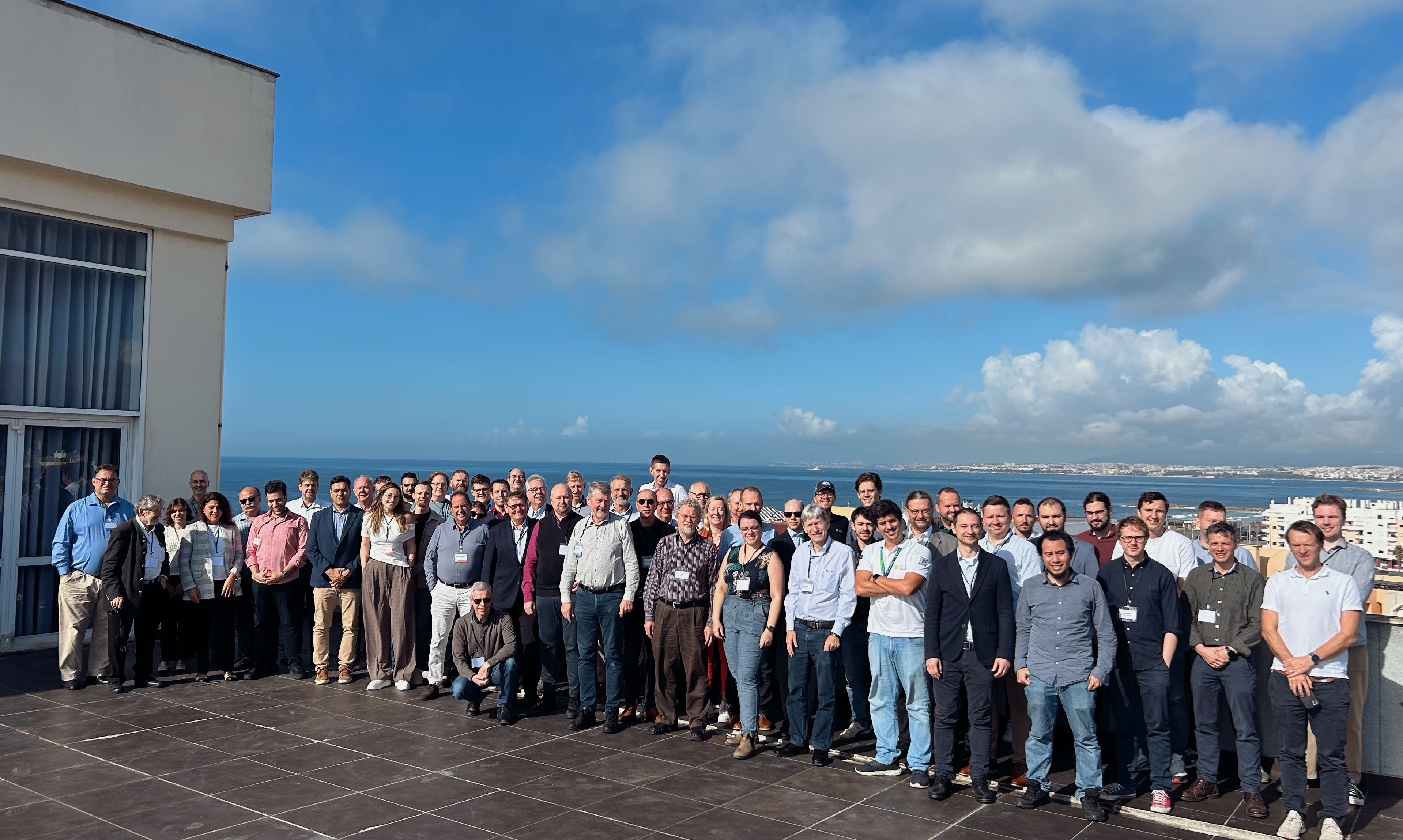
At the Deep Tech Lisbon Event 2025, three leading European projects — AIMS5.0, SC4EU and Arrowhead fVPN — met in a coordinated workshop to explore cross-project collaboration, talent development, and future pathways for Europe’s semiconductor ecosystem. The session ran parallel to the SC4EU General Assembly and the Arrowhead fVPN technical meeting, bringing partners together to accelerate knowledge exchange, align priorities and support a more resilient digital Europe.


Project Results
September 19 2025

AIMS5.0 at the European Research & Innovation Days – Reflections from Brussels

The European Research and Innovation Days (RiDaysEU) are always a special moment in Europe’s calendar. For two days each September, policymakers, researchers, industry leaders, and innovators gather in Brussels to exchange perspectives on where Europe stands and where it must go in order to remain competitive in a fast-changing global landscape.

This year, one of the highlights for our team was the invitation to present the AIMS5.0 project, which had been selected by the Chips Joint Undertaking (Chips JU) as one of the flagship initiatives to be showcased at the exhibition. To be chosen from among so many excellent projects was not only an honor, but also a recognition of the importance of AIMS5.0’s work for Europe’s industrial and digital future.

Project Results
May 20 2025

AIMS5.0 at INSIDE Connect 2025: Showcasing AI for Sustainable Manufacturing

1. Introduction

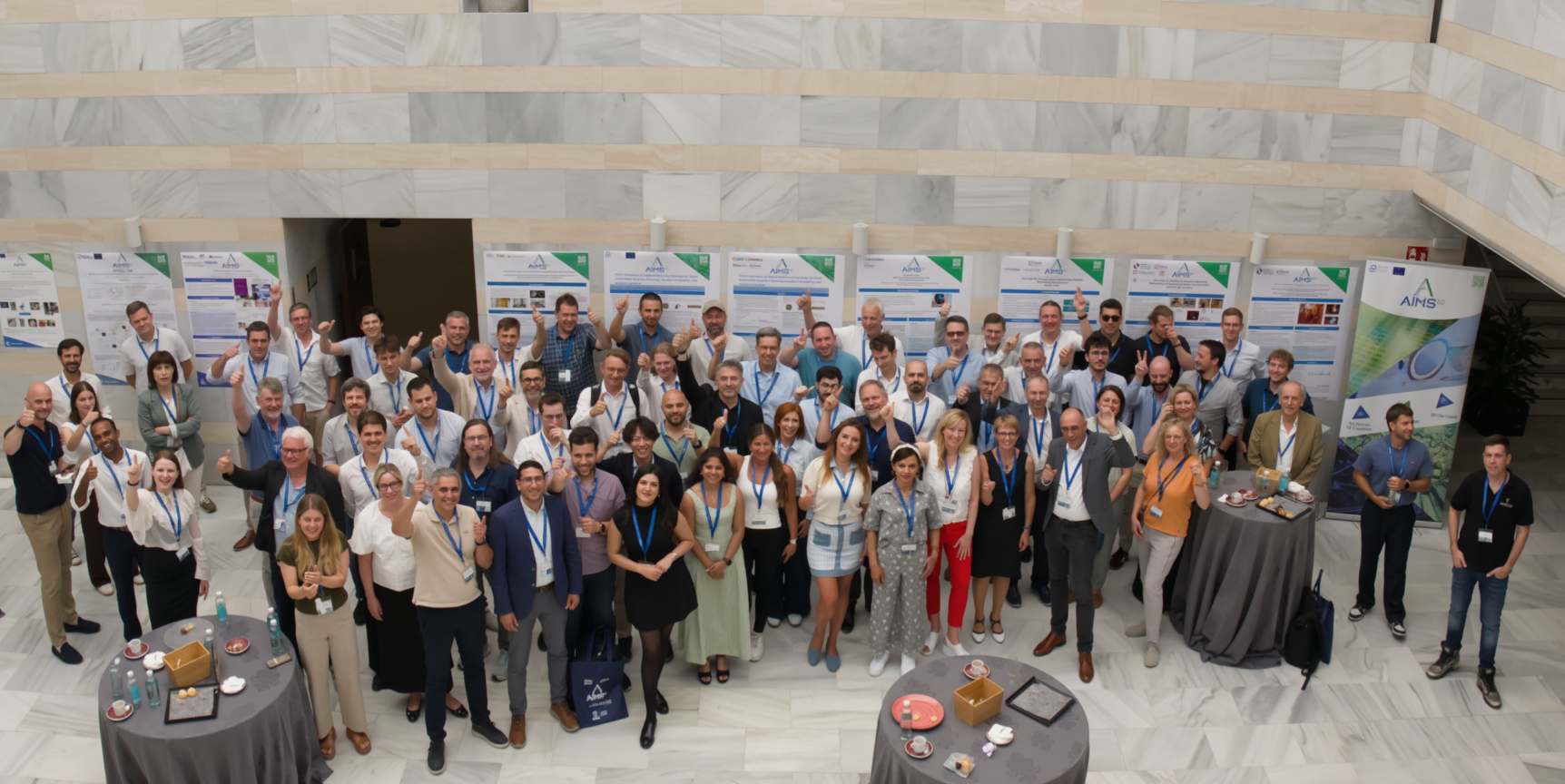
At INSIDE Connect 2025 in Málaga, the AIMS5.0 project was in the spotlight as leading experts gathered to discuss Europe’s digital transformation. The event brought together innovators in AI, Edge Computing, and sustainable manufacturing to shape the future of European industry.

2. AI for Sustainable Manufacturing

Professor Pal Varga from the Budapest University of Technology and Economics presented AIMS5.0’s advances in developing AI tools and algorithms for industrial processes. The project integrates a wide spectrum of approaches—from statistical models and Bayesian methods to state-of-the-art deep neural networks and reinforcement learning—providing powerful solutions for sustainable and efficient manufacturing.

Project Results
May 20 2025

AIMS5.0 General Assembly in Gdansk: A Resounding Success

The AIMS5.0 consortium has once again demonstrated the power of European collaboration as 53 partners from across the continent converged in the historic city of Gdansk for our most productive General Assembly to date. Over two intensive days, our diverse team of researchers, industry experts, and technology leaders advanced our shared mission of transforming European manufacturing through artificial intelligence.

Two Days of Strategic Progress

The carefully structured agenda maximized both collaboration and concrete outcomes:

Day 1: Building Momentum

  • Opening plenary sessions setting the stage for strategic discussions
  • Public presentations showcasing our latest achievements
  • Networking lunch fostering cross-partner collaboration
  • Productive evening sessions deepening work package coordination
  • Day 2: Driving Results

  • Deep-dive technical sessions across all nine work packages
  • Extended plenary meetings addressing consortium-wide priorities
  • Strategic closing discussions charting our path forward
  • Project Results
    Mar 28 2025

    A Glimpse into the Future - Modern Conveyor Systems and Virtual Robotics

    The AIMS5.0 team at Stralsund University of Applied Sciences is working on the monitoring of very slow-rotating ball bearings as well as complex simulations for mobile robots.


    Predictive Maintenance for Modern Conveyor Systems

    In wafer cassettes or FOUPs, silicon wafers, the "blanks" for microchips and other electronic components, are transported over long distances through the cleanrooms of semiconductor factories. This transport is done using conveyor systems. These conveying systems are extend over kilometers, have a large number of drive units, and almost countless ball bearings. Robustness against failure is essential for conveyor systems, as a failure of a conveyor can quickly lead to a backlog of material flow, thus blocking large areas of production. Methods for predictive maintenance are therefore in high demand to avoid costly downtimes. This is where Use Case 13: "Intelligent Sensors improving Robustness of Automated Wafer Transportation and Storage Systems" comes in. In this use case, Stralsund University of Applied Sciences is explicitly focusing on roller conveyors. With this type of conveyor system, the drive units only rotate when needed, i.e., when a FOUP passes, and at a very slow rotational speed. A commonly used approach for detecting damage in rotating ball bearings or rolling element bearings is the detection of vibrations. In many systems, the frequency of these vibrations is within a range audible to humans, so damage detection works with acoustic analyses. The challenge with the investigated conveyors lies in the maximum shaft speed of approximately 120 rpm and less. The vibrations that occur here are low in energy and, in combination with the low frequency and short running times, difficult to detect. The simultaneously occurring ambient noise level is significantly louder at approximately 70 dB(A), dominates the sound signals recorded by the sensors, and further complicates the evaluation.

    Project Results
    May 15 2025

    Building Trust in AI Through Visual Storytelling – KAI and Infineon

    We advance and enhance sustainability in semiconductor manufacturing by leveraging AI-powered defect image classification. Our project's core concepts are explained through visual storytelling in an engaging and dynamic explainer video. Our goal is to make the AI project accessible and relatable for everyone, ensuring that all stakeholders can grasp the technology's significance. Through clarity and transparency, we aim to foster trust in our AI initiatives, showcasing our commitment to trustworthy AI. The explainer video serves not only to inform but also to engage both internal and external audiences. By sharing this video across social media platforms and within our organization, we are promoting our AI project with a modern twist, captivating our viewers while emphasizing our sustainability goals. The video is now available on the AIMS5.0 YouTube channel. We invite you to view it and gain further insights into how AI is driving innovation in semiconductor manufacturing. In developing the video, we carefully selected the tools and techniques best suited for our needs. Utilizing Adobe Creative Cloud, including tools like Adobe Illustrator and Adobe After Effects, allowed us to create high-quality visuals that align with our storyline. We also drew on the illustration libraries provided by Infineon to enrich the video content.  

    Project Results
    Mar 28 2025

    NEW ARROWHEAD CLI UTILITIES ACCELERATE INTEGRATION AND DEVELOPMENT

    A new Command Line Interface (CLI) utility developed in Go has been introduced to support faster, easier development with the Eclipse Arrowhead framework. The tool was recently showcased at the March 2025 Arrowhead bi-weekly meeting by Johan Kristiansson from Luleå University of Technology, a key partner in the AIMS5.0 project.


    Purpose and Design

    The CLI was designed to simplify key developer workflows in Arrowhead-based systems. Inspired by popular tools in cloud-native ecosystems, the CLI brings familiar efficiency to Arrowhead integration—ideal for both newcomers and experienced users working on AIMS5.0 and similar industrial automation projects.


    Core Features

    • Certificate Automation: Streamlines the process of generating and registering certificates
    • Service & System Registration: Allows direct interaction with Arrowhead core services
    • Environment-Based Configuration: Uses environment variables instead of property files—perfect for Kubernetes and containerized deployments
    • Rapid Prototyping: Enables creation of producers and consumers in minutes


    Project Results
    Mar 19 2025

    AIMS5.0 Project Video Released: Showcasing AI-Powered Manufacturing Innovation

    We're excited to announce the release of our official AIMS5.0 project video! This short but comprehensive overview highlights how our collaborative initiative is revolutionizing European manufacturing through AI-enabled technologies.

    What's in the Video?

    Our new 2-minute video takes viewers on a journey through the AIMS5.0 project, illustrating how we're strengthening European digital sovereignty in sustainable production. The video showcases:

    The challenges facing European industries in adopting advanced AI and IoT technologies

    How AIMS5.0 brings together 53 partners across Europe to transform manufacturing
    Our approach to creating shorter supply chains and greener production methods
    The structure and purpose of our nine integrated work packages Key project outcomes, including 20% faster time-to-market and 20% reduced environmental footprint

    Why This Matters

    As Europe faces increasing global competition, AIMS5.0 represents a critical step in maintaining and enhancing our industrial competitiveness. The video demonstrates how our €70 million initiative is driving the shift from Industry 4.0 to Industry 5.0, creating human-centric workplace conditions while enabling the transformation toward climate-friendly production. From AI-enabled sensors to sustainable semiconductor supply chains, the video offers a glimpse into how AIMS5.0 is building a more resilient, efficient, and eco-friendly manufacturing future for Europe.

    Project Results
    Mar 18 2025

    SC4EU Launches Official Project Video: See Our Vision for Resilient Semiconductor Supply Chains

    We are delighted to announce the release of our official SC4EU project overview video, providing a comprehensive look at our groundbreaking initiative to revolutionize semiconductor supply chain management across Europe and beyond.


    Visualizing Our Mission

    Our newly released video "SC4EU: True Demand-Driven Semiconductor Supply Chains for Europe" encapsulates the essence of our ambitious project in just two minutes. It highlights how we're addressing one of the industry's most pressing challenges – the unpredictability of demand in semiconductor supply chains and the resulting bullwhip effect that leads to chip shortages and inefficiencies.


    As illustrated in the video, SC4EU brings together 14 partners, including leading semiconductor manufacturers Infineon Technologies AG (coordinator), NXP, and STMicroelectronics, along with equipment manufacturer ASML, software giant SAP, and academic institutions from Germany, Netherlands, Greece, France, and Austria.


    Key Project Elements Showcased


    The video provides insights into our core innovative approaches:

    Project Results
    Dec 09 2024

    Unlocking Sustainable Manufacturing and Supply Chains: The Power of Semantic Technologies


    The AIMS5.0 EU funded project stands for “Artificial Intelligence in Manufacturing leading to Sustainability and Industry5.0” and is a Collaborative Innovation Action between multiple domains with a consortium of over 50 academic and industry partners.

    Its main goals consist of strengthening the European digital sovereignty in comprehensively sustainable production, and boosting the economy by adopting, extending and implementing AI-enabled hardware and software components and systems across the whole industrial value chain. Its aim is to create human-centric workplace-conditions and a climate-friendly production. The AIMS5.0 project supports AI-enabled fabs to be more productive and eco-efficient. It advocates shorter supply chains, better resilience, global competitiveness and higher sustainability.

    The global semiconductor manufacturer Infineon Technologies AG has several contributions to the AIMS5.0 funded project, with one of them being Work Package Four. Work Package Four, “The Open Access Platform” is co-lead by Infineon Technologies and FernUniversität Hagen with contributions from DAC.digital and NXP. The primary objective of the Open Access Platform is to create a consistent and modular semantic description of the semiconductor industry containing industrial domains and supply chains based on the Digital Reference Ontology (DRO), which will be elaborated in the following.

    The Semantic Web and Ontologies

    To define the concept and strengths of ontologies, one first needs to understand the Semantic Web. The Semantic Web was coined from T. Berner Lee as an extension of the World Wide Web that enables machines to understand and interpret meaning behind data. It is founded on the concept of data interoperability allowing information to be easily shared, reused, and combined across different organizations and systems. As a result, a more connected and integrated digital ecosystem is enabled. Traditionally, data on the web has been structured in a human-centric manner, with information presented in formats like HTML text documents that are easily comprehensible to humans. However, these formats are not machine-friendly, making it challenging for computers to interpret and process the data efficiently.
     

    Project Results
    Jun 24 2024

    The next big step in digital transformation is taking shape


    Aiming at a more sustainable, efficient, and user-friendly production, AIMS5.0 is about to show how artificial intelligence (AI) can take a decisive step towards Industry 5.0 and European digital sovereignty. The ambitious research project started a year ago and is part of the EU programme Horizon2020. Its characteristics represent the self-image of EU funded projects as an intelligent collaboration between partners and other projects, for mutual benefit and growth.

    AIMS5.0, the project title sets the direction. The acronym stands for “Artificial Intelligence in Manufacturing leading to Sustainability and Industry5.0” and aims at the potential of artificial intelligence (AI) in the development and manufacture of hardware and software components. In addition to comprehensive sustainability and user-friendliness, the desired goals include significantly increased efficiency in production.

    Semiconductor production predestined for use of AI

    The semiconductor industry in particular is perfectly suited for exploiting the potential of AI. There are many barely visible data-generating manufacturing processes here. At least 250 systems contribute to the manufacture of a product. Each has 20 parameters and 100,000 wafers with up to 10,000 different design variants run in the factory. Considering these figures could be even higher, it is clear that human beings alone are not able to fully comprehend these highly complex processes, let alone monitor them. This is where it takes the assistance of AI. Automatic error detection, for instance, can ensure fewer rejects and an overall higher quality.
     

    Project Results
    Feb 06 2024

    Flights for future - autonomous drones on a mission


    With the attempt to take the European Industry to the next level of digitalisation, first fundamental research activities in AIMS5.0 prepare the way to get the 20 use cases off the ground bringing the future of a highly efficient fabrication to life. One of the striking examples is an autonomous indoor drone.

    As a work result of work package 5, the drone will demonstrate an AI based improved connection between production and logistics. Developed by IPH, “Institut für integrierte Produktion Hannover” from Germany it will work as a scan device covering a complete production site of carmaker BMW to create a digital twin of it.

    Daily scans for digital twins

    The drone is able to navigate autonomously through a manufacturing hall catching every corner and measuring each millimetre. Other than a ground bound device, it can measure even closed robot cells or conveyor belts. Together with the metrics from a ground bound automated guided vehicle system (AGV), a robot dog, the gapless data collection enables an accurate three-dimensional reproduction for a digital twin with regular updates.


    Event
    Feb 02 2024

    Sharing knowledge in Austria


    With regard to collaboration and synergy effects within and across the project, a major event in 2023 is worth being noted, which, in fact, was a two-in-one event. 

    On 27-28 September, the University of Applied Sciences in St. Pölten, Austria, hosted the Deep Tech Workshop as part of the two large-scale European initiatives AIMS5.0 and Arrowhead fPVN, while at the same time, the new Research Studio Smart Digital Industries and Services (SDIS) was opened on the premises of the university.    

    Both Arrowhead fPVN coordinator Luleå  University of Technology (LTU) in Sweden and SDIS founder Research Studios Austria Forschungsgesellschaft (RSA FG) are members of the AIMS5.0 consortium. LTU is co-leader of WP3 working on the cyber architecture, and RSA is co-leader of WP7 dealing with human acceptance, trust and ethics for Digital Workspaces. 

    Deep Tech Workshop for collaboration

    The Deep Tech Workshop’s primary focus was on common technologies and initial use of use-cases in AIMS5.0 and Arrowhead fPVN. The latter project name stands for the Arrowhead framework and implementation platform focusing on flexible Production Value Network (fPVN). The workshop provided a valuable forum for sharing knowledge and exchanging ideas on topics like cyber architecture, data models or AI code generation.

    Event
    Nov 14 2023

    Collaboration at its best


    AIMS5.0 is one of those projects where major findings from other research initiatives are taken to the next level, thus bringing them to life. The subject in question is a Digital Reference (DR), a holistic ontology for supply chains in the field of semiconductor. Its characteristics in turn, represent the self-image of the complete AIMS5.0 project as an intelligent collaboration between partners and other projects, for mutual benefit and growth. 

    The Semantic Web model will help to clearly interpret and exchange countless information and data in a complex supply chain. This way, ambitious goals in fields like quality management or sustainability can easily be achieved in a new manner. In AIMS5.0, DR and other ontologies are subject to WP4, based on the idea that in the area of the Internet of things (IoT) ontology creates a language that is understood by humans and computers alike with the aim of smooth interaction throughout the entire supply chain.

    Total network

    A targeted open access platform shall improve a comprehensive data exchange, and the DR stems from the previous digitalisation project Productive4.0 forming the backbone for the intended platform. Moreover, AIMS5.0 benefits from the relevant research work in the following smaller but highly specialised project SC³, which exclusively focused on DR and ontology and created the further elaborated theoretical foundation for various industrial use cases in AIMS5.0.