Dezember 9 2025
1. AIMS5.0 at EFECS Malta 2025
Roadmaps, Project Presentations and New Paths for European Chips
EFECS 2025 took place on 3–4 December at the Hilton Hotel in St Julian’s, Malta, bringing together Europe’s leading stakeholders in electronic components and systems. The forum is co‑organised by Chips Joint Undertaking together with the industry associations AENEAS, EPoSS and INSIDE, and is recognised as the key annual meeting point for Europe’s semiconductor and digital systems community.
This year’s edition was particularly strategic: it combined high‑level discussions on Europe’s technological sovereignty with concrete project presentations and the official release of new roadmaps that will guide future work in the chips domain.
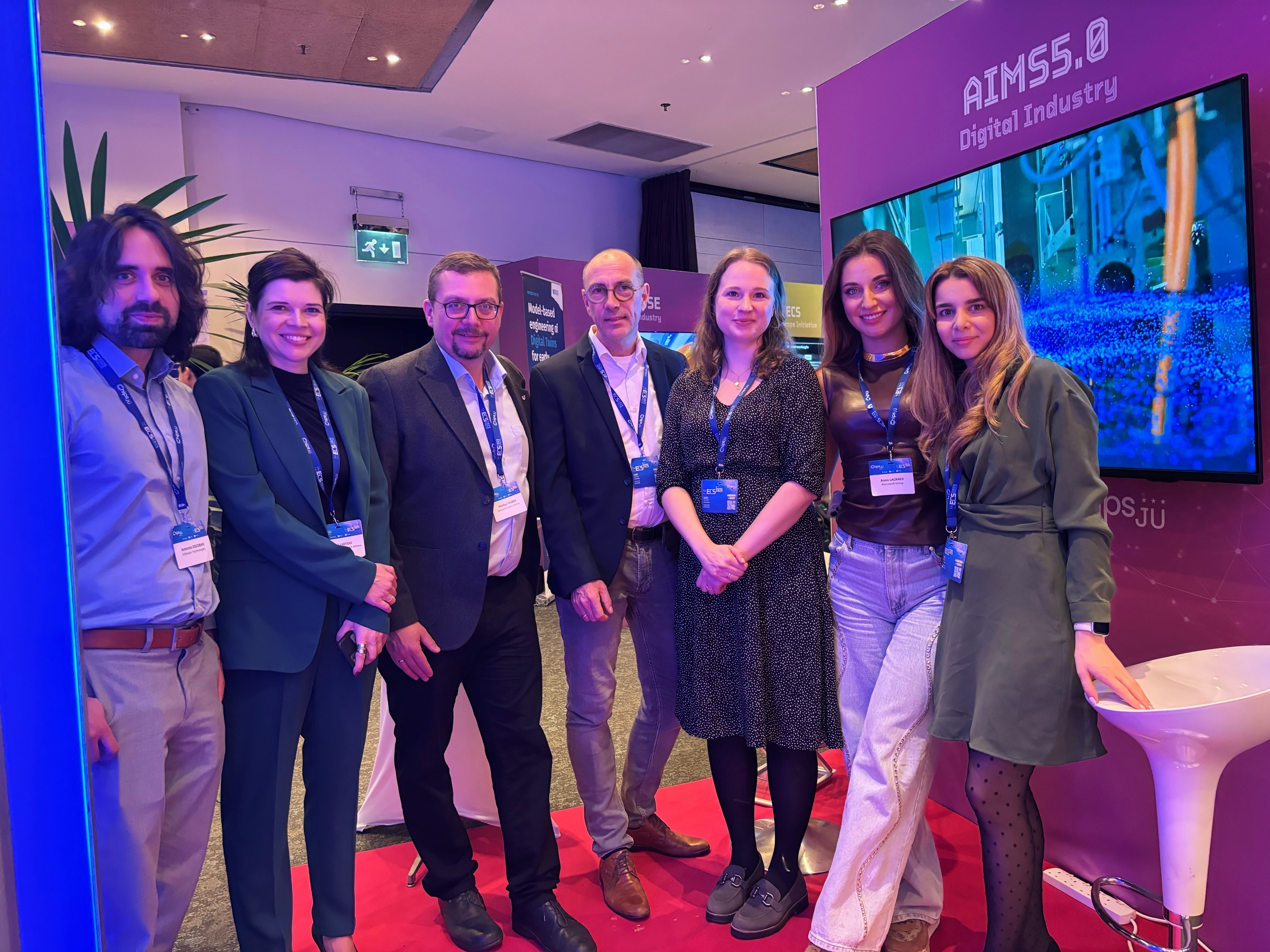
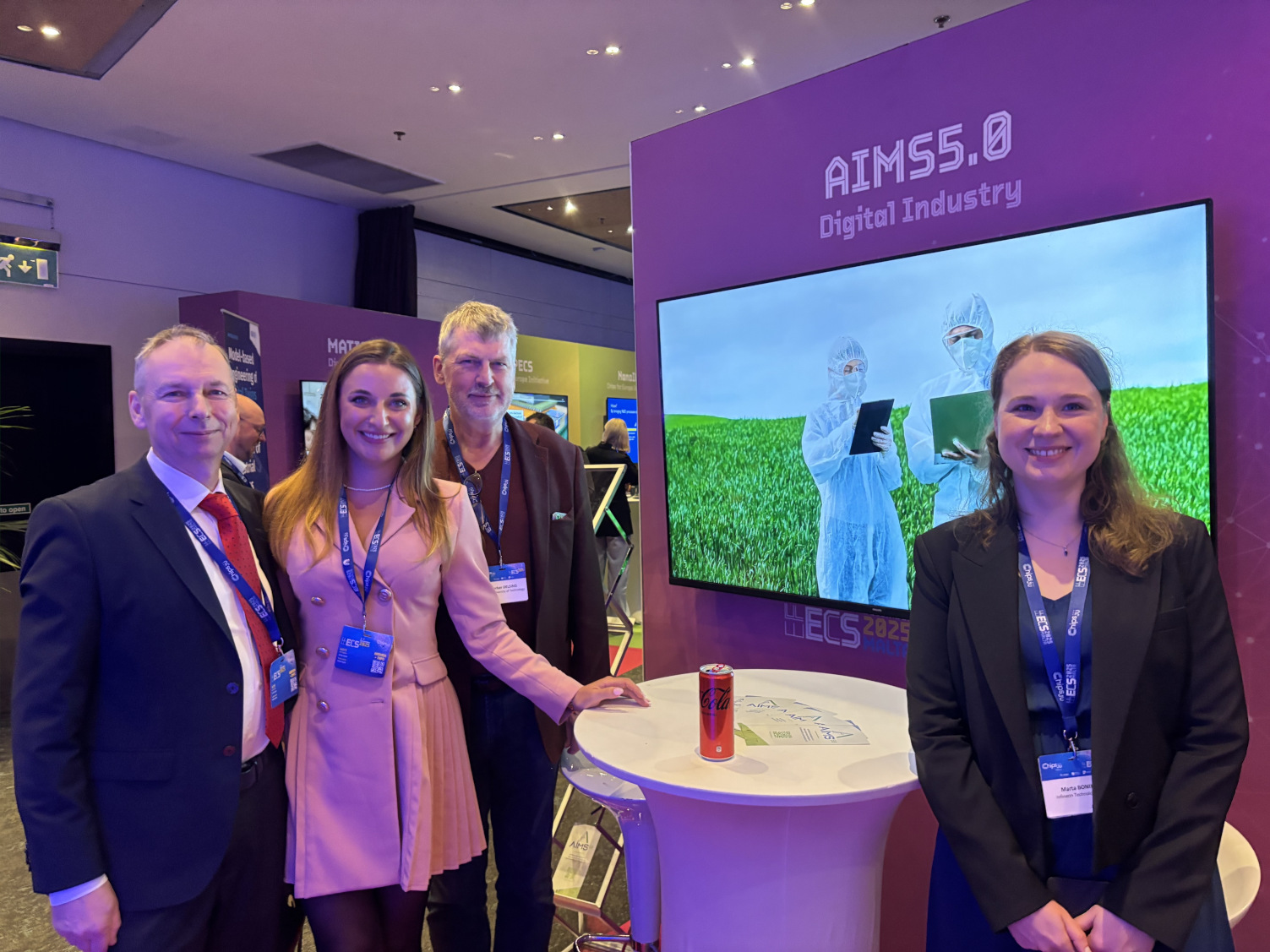
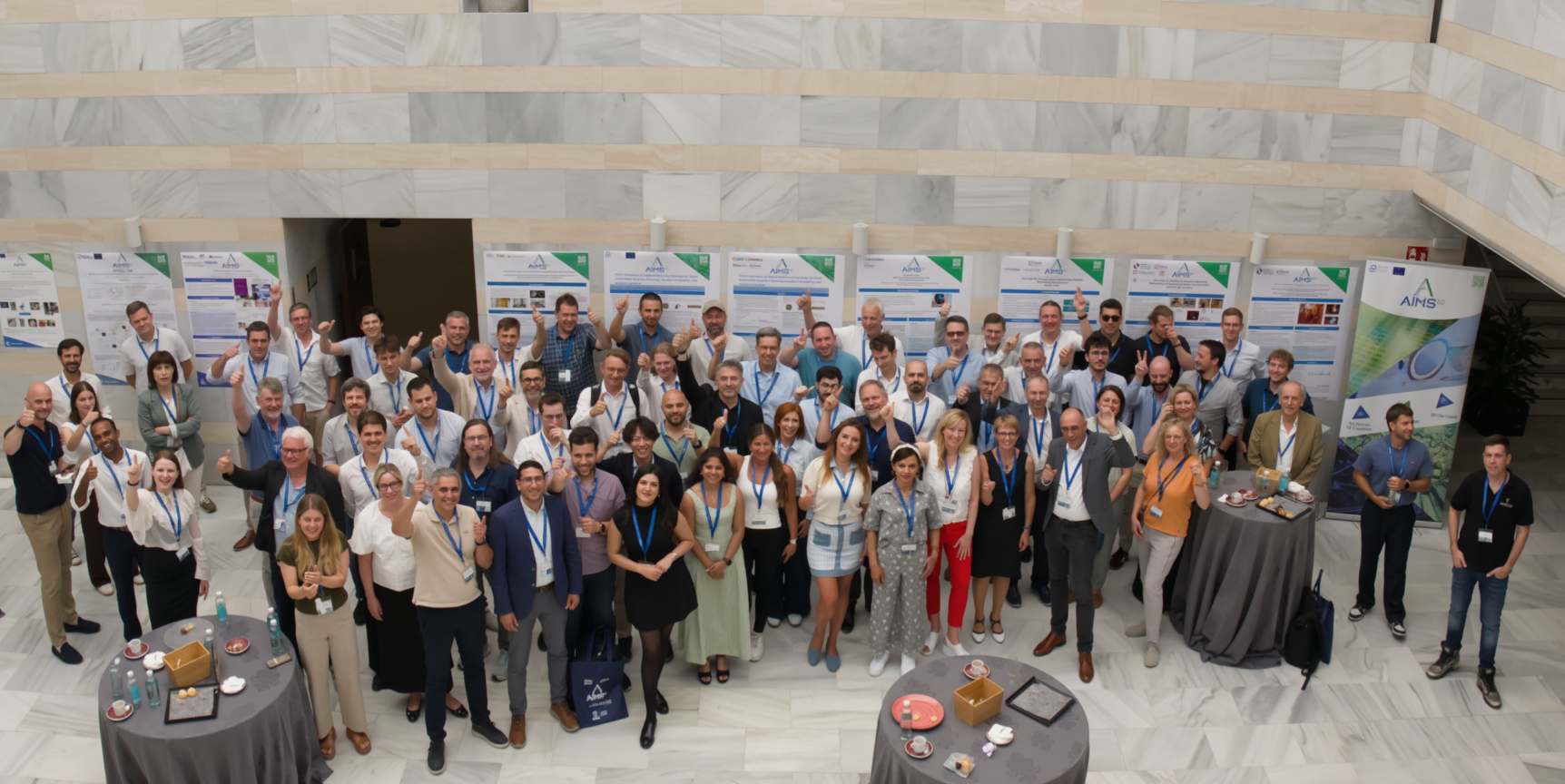
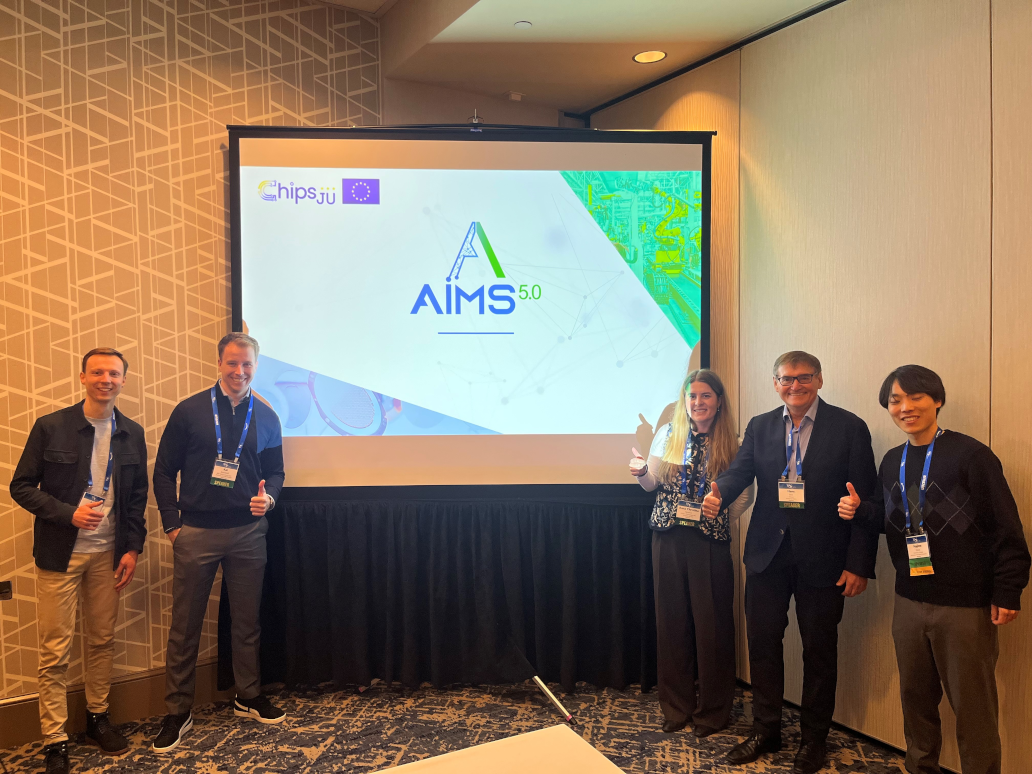
AIMS5.0 was actively present in the programme. The AIMS5.0 team contributed with project visibility and engagement in discussions around digital transformation of semiconductor manufacturing, data‑driven pilot lines and cross‑industry collaboration. This presence supported positioning the project within the broader Chips JU landscape and opened several follow‑up discussions for future work.
Roadmaps for Europe’s semiconductor future
One of the central elements of EFECS 2025 was the presentation of the updated Electronic Components and Systems Strategic Research and Innovation Agenda (ECS‑SRIA) 2026. Prepared by AENEAS, EPoSS and INSIDE, the new edition sets research and innovation priorities for the coming years and aligns them closely with the implementation goals of the Chips Joint Undertaking and the European Chips Act.
Alongside this, Chips JU announced the initial adoption of the 2026 Work Programme, defining funding priorities and opening the way for new proposals under semiconductor manufacturing, pilot lines, materials and advanced architecture research. Together, SRIA and the Work Programme form a clear semiconductor roadmap for Europe — from high‑level strategy to funded implementation.
Project presentations and technology perspectives
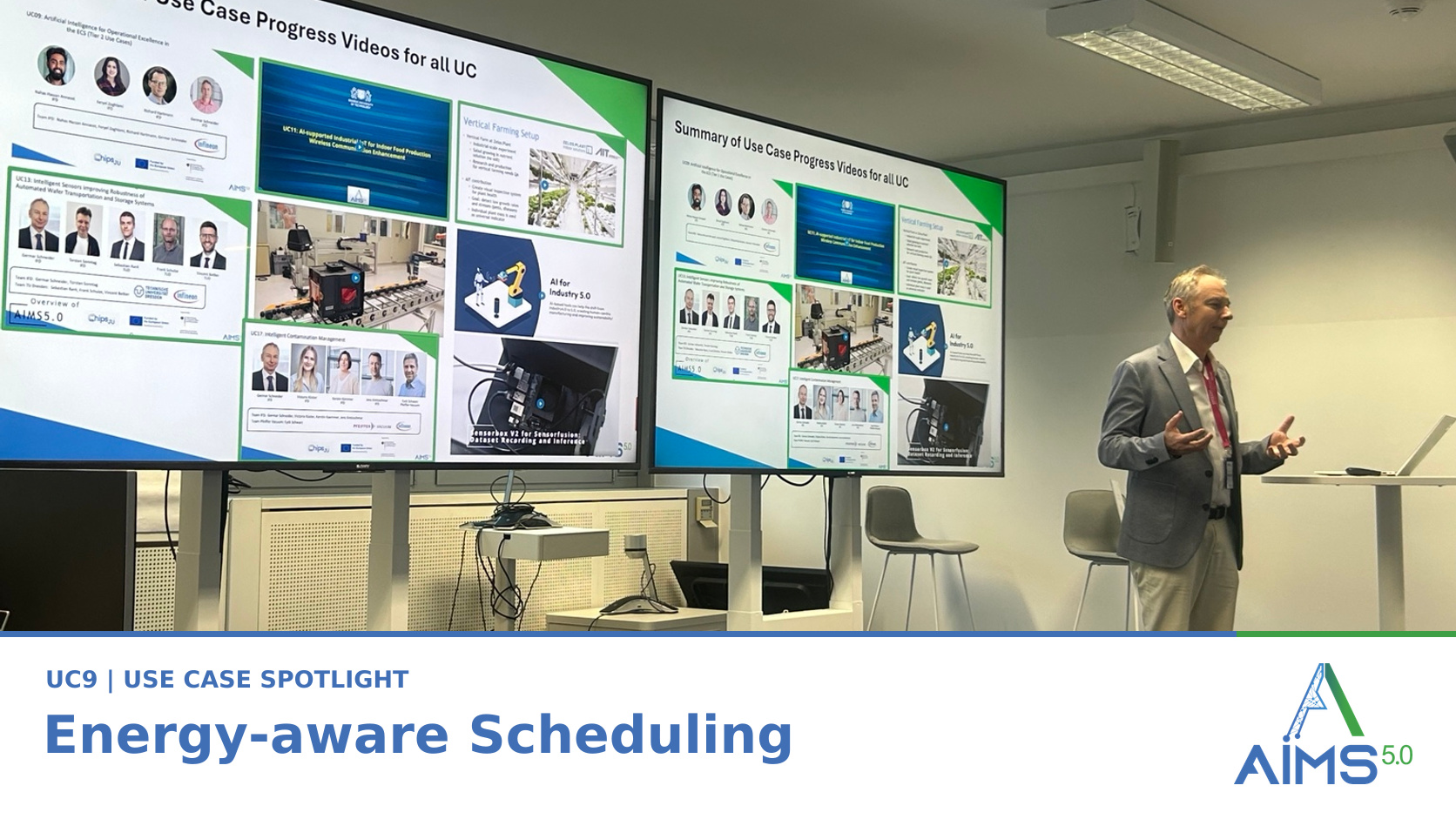
EFECS also hosted project presentations that demonstrated how research and industrial partners translate these priorities into real development pathways. Among the speakers were:
- Yvonne Bergmann, Robert Bosch GmbH
- Jerker Delsing, Luleå University of Technology
- Germar Schneider, Infineon Technologies Dresden AG
These institutions are partners of AIMS5.0, and their contributions reflected shared work on automation, advanced chip systems, data‑driven manufacturing and scalable semiconductor competence. Their slides highlighted pilot‑line development, industrial use‑cases and collaborative models — all highly aligned with AIMS5.0 architecture and vision.
Workforce and industrial capability
A major thematic thread across presentations was capability growth and the need for robust industrial skill integration. Instead of focusing only on numbers, discussions emphasised how semiconductor workforce development, pilot‑line training and advanced manufacturing expertise will be core enablers for next‑generation production.
AIMS5.0 at EFECS: partner meetings and next steps
Throughout the event, we held meetings with semiconductor companies, research labs and cluster representatives interested in shaping new Chips JU and Horizon Europe proposals. Many engagements were directly linked to AIMS5.0 themes — automation, digital factories, cross‑border collaboration, exploitation and impact dissemination.
Nexuswelt will continue building project visibility, coordinating collaboration points and supporting proposal development linked to AIMS5.0 outcomes and 2026 roadmap priorities.
Conclusion
EFECS Malta 2025 demonstrated a clear shift towards alignment between roadmaps, industrial needs and active research. With AIMS5.0 being presented among leading semiconductor partners and positioned within the future strategic landscape, the project enters its next collaboration phase supported by strong ecosystem engagement.




 Imprint